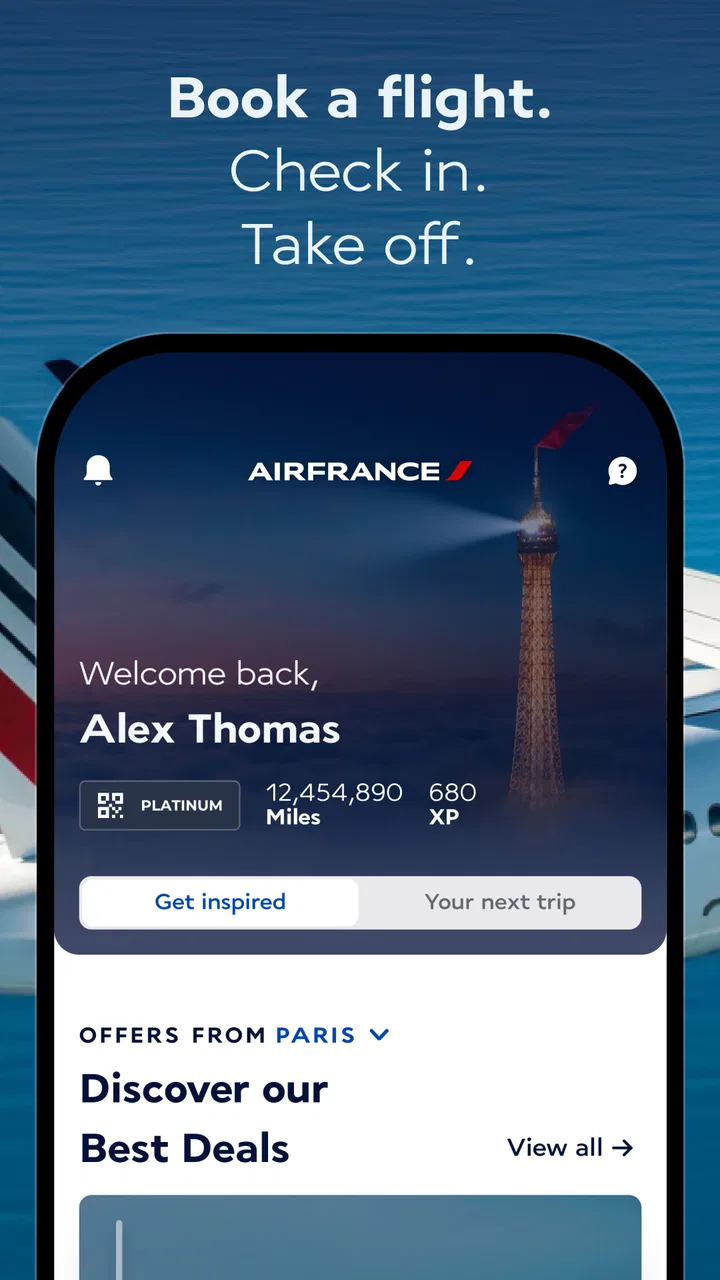
Air France - Book a flight
- 4.4
- Rating
- 5.00M
- Installs
- Free
- Price

 Analysis by App-foxy
Air France - Book a flight is the kind of travel app that makes the most sense when a trip is already taking shape. I installed it expecting a straightforward booking tool, but I found a broader travel companion built around the moments before departure, the airport itself, and the return home. That wider focus is useful, although it also means the app feels most valuable to people who regularly fly with Air France rather than to travelers comparing every airline on every route.
Developed by AIRFRANCE S.A., this free Travel & Local app is available to everyone and has built a strong audience, with over five million installs and an average rating of 4.5 from around 164,000 ratings. Its current version is 16.9.0, and it runs on Android 8.0 or later. Those details matter less than the practical question: does it deserve a permanent place on your phone after the first booking? In my experience, the answer depends on how often Air France is part of your travel routine.
From a promising first week to a useful travel habit
The first impression is easy to understand. Instead of moving between a browser, an email inbox, and several airport tools, I can use one Air France-focused space to handle much of the journey. The app is clearly designed for travelers who want to check a booking, keep track of travel details, and stay connected to the airline while plans develop.
You May Also Like

 Blood Strike: 2.5 Anniversary
Blood Strike’s Loadouts Turn Every Drop Into a Tactical Gamble
A close look at Blood Strike’s custom loadouts: how fast access to signature weapons reshapes its battle royale rhythm, rewards preparation, and narrows the gap between fights.

 Pandora - Music & Podcasts
Pandora’s Music Is Easy to Start, but Harder to Recover
Pandora’s strength is its low-effort path from a seed to a station. Its weak spot is how much confidence it asks you to place in connection, setup, and quiet recovery.

 8 Ball Pool
 Is Built on Rivalries, Rematches, and Routine
A close look at the rivalries, rematches, shared routines, and unanswered safety questions that turn a quick pool match into a persistent mobile community.

 Samsung Music
’s Quiet Strength Is Playing What You Already Own
Its reach comes less from spectacle than from dependable access to a personal library. That simplicity is both the app’s strongest retention engine and its ceiling.

 AccuWeather: Weather Radar
AccuWeather Review: A Quick, Clear Forecast for Everyday Decisions
For everyday plans, the best forecast is the one you can understand quickly. AccuWeather makes rain timing, radar, and local conditions easy to act on, with a few trade-offs.

 Hill Climb Racing
Why Hill Climb Racing Still Turns Crashes Into One More Run
A tiny car, a bumpy hill and one more upgrade: Hill Climb Racing keeps resurfacing because its simple chaos makes every near-miss feel personal.
More From Our News Desk
View All News


That airline-specific approach is both its main strength and its first limitation. A general flight-search service is usually better when I am still deciding between Air France, another carrier, a train, or a completely different date. This app becomes more convincing after I have chosen Air France. At that point, the information is more relevant because it is tied to my airline and trip rather than mixed with offers that may never apply.
During the first week, I would use it in a fairly deliberate order. I would begin by checking the itinerary, then review the available booking or trip-management options, and finally open the app again closer to departure. This prevents the common mistake of installing an airline app only to use it once and forget it. The real test is whether it reduces small moments of uncertainty, such as wondering which flight details are current or where to find the next step in the journey.
The most useful habit is opening the app at decision points, not constantly. I do not need to browse it every day. I need it when I am choosing a flight, preparing for departure, checking what has changed, or organizing the trip home. That makes it less like a general travel magazine and more like a practical reference tool.
For a realistic example, imagine a weekend trip planned around a busy work schedule. I might book the flight during a lunch break, revisit the itinerary after a meeting changes my plans, and check the trip again while packing. At the airport, I would rather consult one airline-specific app than search through old messages for the correct confirmation. The value is not dramatic; it is the quiet removal of several small annoyances.
What makes the early experience feel focused
The app does not ask me to learn an unfamiliar travel system from scratch. Its purpose is immediately recognizable: Air France flight booking and journey management. That clarity helps when I am tired, in a hurry, or using a phone in an airport with limited attention. I can approach it with a specific question instead of wandering through a large travel marketplace.
It is also a sensible companion for someone who has already decided to fly with the airline. Searching directly through the carrier can make the next steps feel more connected than using a third-party booking site and then moving to an airline website for everything else. That does not mean the airline app replaces every other travel tool, but it gives the Air France portion of the trip a clear home.
One practical tip is to treat the app as a trip checkpoint rather than as the sole source of travel planning. I would still compare schedules and total travel plans elsewhere when I am flexible. Once the airline and itinerary are settled, I would rely on this app for the Air France-specific part of the experience. That division of labor avoids expecting it to do a general travel marketplace’s job.
Why it can earn a place month after month
The strongest long-term argument is repetition. If I fly Air France several times a year, the app can become a familiar starting point for each journey. I do not have to remember a different process every time, and I can return to the same place when another booking needs attention. That recurring value is more convincing than the novelty of installing it before a single holiday.
Frequent travelers will appreciate the difference between an app that merely sells a ticket and one that stays relevant after payment. A booking is only the beginning of a trip. Plans can be adjusted, details can be rechecked, and airport preparation often happens in several short sessions rather than one long session. An airline-centered app fits that pattern better than a single confirmation email.
For occasional travelers, the value is more conditional. If I take one Air France trip every few years, I may not want another permanent app on my phone. I can install it before the journey, use it for the relevant tasks, and remove it afterward if it no longer serves a purpose. That is not a failure; it simply reflects the difference between a recurring travel utility and a one-off booking tool.
The app’s audience size supports the idea that it works for many travelers, but popularity alone should not decide whether I keep it. The better question is whether my own airline habits match its design. Someone who repeatedly books Air France can gain continuity. Someone who always chooses the cheapest suitable carrier will probably get more lasting value from a neutral flight-search app.
How I would combine it with other travel tools
I would not use this app as my only travel organizer. A broader travel service may be better for comparing airlines, building a multi-carrier itinerary, or combining flights with accommodation and ground transport. An airport’s own app may provide more location-specific information. A calendar can remain the simplest place for a personal schedule, and a secure document wallet may be more suitable for unrelated travel records.
Where this app fits is the airline layer. I would use a comparison service while deciding, Air France - Book a flight once the Air France booking is relevant, and a separate map or local transport app after arrival. That approach is more realistic than searching for one application to cover every part of a complicated trip.
A less obvious advantage of this arrangement is reduced confusion. If I use a neutral service for comparison and the airline’s own app for airline-specific follow-up, I know which app to open depending on the question. I would not expect a third-party search result to be the final authority for an Air France booking, nor would I expect the Air France app to compare every possible alternative impartially.
Who benefits most from keeping it installed
I think it is a good fit for business travelers who book the same airline repeatedly, families who want a familiar place to review a shared trip, and travelers who dislike managing airline details through scattered browser tabs. It is also useful for people who prefer dealing directly with the carrier after making a booking through an airline-focused channel.
I would be more cautious if I were a backpacker changing airlines frequently, a traveler whose plans depend on comparing many carriers, or someone who rarely flies. In those cases, the app may be perfectly functional but still not justify permanent storage. The right choice is not about whether the app can be useful; it is about whether that usefulness returns often enough.
The maintenance cost is low, but not zero
Airline apps are not completely set-and-forget tools. They need to be kept current because travel information and booking workflows can change. This application has been available since Jan 23, 2014, and its continued updates show an established product rather than a short-lived experiment. Still, I would check that it is updated before an important trip instead of assuming an old installation will behave perfectly.
My maintenance routine would be simple: keep the app installed while a trip is active, open it before leaving for the airport, and remove it when I no longer need it if I travel only occasionally. That keeps the app useful without allowing a collection of unused airline applications to build up. Frequent flyers can leave it installed and let the repeated workflow justify the space.
There is also a mental maintenance cost. Every travel app creates another place where I might look for information. If I book through a third party but manage the trip through Air France, I need to be consistent about where I check the latest details. I would save the booking in the airline app as soon as practical and avoid relying on an old email as my only reference.
Another useful discipline is to check the app when a trip changes, not just when the original booking is made. Travelers often remember the initial itinerary but forget that a later adjustment can make an earlier screenshot or printed note unreliable. The app is most valuable when treated as a current trip reference rather than a digital receipt.
Where the experience can become tiring
The main source of fatigue is the app’s narrow identity. It is designed around Air France, so it cannot be my neutral travel command center. If I am comparing several airlines, I may need another service first. If my journey includes multiple carriers, the information may be split across applications, and I should not expect one airline’s app to make that complexity disappear.
There can also be friction when I am trying to solve a problem rather than complete a normal journey. A travel app can present booking and trip information clearly, but unusual cases may still require customer support or a browser. I would not install it believing that every complicated change, exception, or special request will be resolved inside the app itself.
That distinction is important for expectations. The app can make routine travel administration more convenient; it does not remove the underlying complexity of air travel. When plans are simple, the focused design helps. When plans involve several passengers, unusual changes, or multiple airlines, I may still need patience and a second channel.
I also find that airline apps are easiest to appreciate when I already know what I want to do. They are less satisfying as browsing environments. A person who enjoys exploring destinations, comparing flexible dates, or discovering unexpected routes may prefer a broader travel platform. This app is more practical than inspirational, and that is a strength only when practicality is the goal.
Small workflow choices that make a difference
I would avoid opening the app for the first time while rushing through the airport. Installing it before the travel day gives me time to understand where the booking and trip information are located. That small preparation step matters because airport stress makes even familiar interfaces feel slower.
I would also use the app alongside a backup plan. Important travel details should not exist in only one place when I am crossing borders or dealing with a weak connection. I might keep the essential itinerary accessible through another personal record as well. This is not a criticism unique to Air France; it is sensible travel practice whenever an app becomes part of the journey.
For families, I would check every passenger’s details carefully rather than assuming that one person’s view automatically covers every need. For work travel, I would confirm that the itinerary in the app matches the record required by my employer. These checks are simple, but they prevent the app from becoming a source of false confidence.
One of the better long-term uses is reviewing the trip in stages. I would first use it for the booking decision, then return during preparation, and finally consult it around departure. That staged workflow is more efficient than repeatedly searching without a purpose, and it lets the app support a real travel routine instead of becoming another notification-driven distraction.
My long-term verdict after the novelty fades
Air France - Book a flight earns lasting space on my phone when Air France is a recurring part of my travel life. Its greatest strength is continuity: the same airline-focused destination can support the journey beyond the initial purchase. The free price and Everyone age rating make it easy to try, while the established release history and current version suggest that the app is maintained as an ongoing service.
I would recommend it to regular Air France passengers, travelers who prefer managing bookings directly with the airline, and anyone who wants a focused companion instead of another general-purpose travel marketplace. I would especially keep it installed during an active trip, when quick access to airline-specific information is more valuable than broad comparison tools.
I would skip permanent installation if I fly many different airlines, book only through neutral travel services, or take Air France trips so rarely that the app would sit unused for most of the year. In those situations, installing it temporarily may be enough. A general travel app will probably offer better month-to-month value because it remains useful across more carriers and trip types.
My final judgment is positive but specific: this is not a universal replacement for every travel app, and it should not be judged that way. It is a focused Air France utility that becomes more useful through repeated journeys and sensible preparation. If your travel pattern matches the airline, it can become a dependable habit rather than a disposable booking app. If it does not, the usual alternatives will give you broader reach and less reason to maintain a separate airline application.
For me, that is the honest measure of its success. The first booking makes the app appealing, but recurring trips determine whether it stays. When I use it at the right moments, keep my expectations realistic, and combine it with a neutral comparison service when necessary, it provides practical value without demanding much attention.
FAQs for Air France - Book a flight
01What features does the Air France app offer for travelers?
The Air France app provides a comprehensive suite of features for travelers, including flight booking, check-in, and real-time flight status updates. Users can also manage their reservations, access boarding passes, and receive personalized notifications about gate changes or delays. The app integrates with the Flying Blue loyalty program, allowing users to track their miles and rewards.
02How user-friendly is the Air France app for booking flights?
The Air France app is designed with user-friendliness in mind, offering a streamlined and intuitive interface. Users can easily search for flights, filter options based on preferences, and complete bookings in just a few steps. The app supports multiple payment methods and provides secure transactions, ensuring a hassle-free booking experience.
03Can I check-in for my flight using the Air France app?
Yes, the Air France app allows users to check-in for their flights directly from their mobile devices. The process is simple and can be done within 30 hours of departure for most flights. Once checked in, travelers can access their mobile boarding passes through the app, which can be used at the airport.
04Does the Air France app provide customer support?
The Air France app offers robust customer support options, including a help center with FAQs and contact information for customer service. Users can reach out for assistance directly through the app via chat or phone, ensuring they have the support needed for any issues or inquiries related to their travel plans.
05Is the Air France app compatible with both Android and iOS devices?
Yes, the Air France app is fully compatible with both Android and iOS devices. It is regularly updated to ensure optimal performance across various smartphone models and operating systems. Users can download the app from the Google Play Store for Android devices or the Apple App Store for iOS devices.
Pros
- User-friendly interface enhances booking experience.
- Real-time flight updates keep you informed.
- Multiple payment options for convenience.
- Easy access to boarding passes and itineraries.
- Loyalty program integration for frequent flyers.
Cons
- Occasional app crashes disrupt usage.
- Limited offline functionality for travelers.
- Some features require stable internet.
- Complex refund process can be frustrating.
- Infrequent updates may affect reliability.

Air France - Book a flight
Gallery